

If you're from Singapore and thinking of starting a venture in Malaysia, we humbly submit that this will be the most helpful guide you’ll ever read on the topic!
For context, MISHU is a Malaysian Company Secretary, and we’ve been handling enquiries from others in your position for many years now.

We always make sure a prospect from Singapore understands this:
As a foreigner, requirements to register a business in Malaysia are very different from requirements to run it.
Before registering, they must be aware of what it takes to legally operate in Malaysia, and know they can meet those demands - otherwise what would be the point!
This guide is based on those sessions, covering five things Singaporeans should be aware of about registering a foreign-owned business in Malaysia, namely:
- WRT / USS license requirements
- sector-specific requirements
- where you plan to operate
- business entity options, and
- expatriate work visa needs
Let's begin.
1. WRT / USS License Requirements
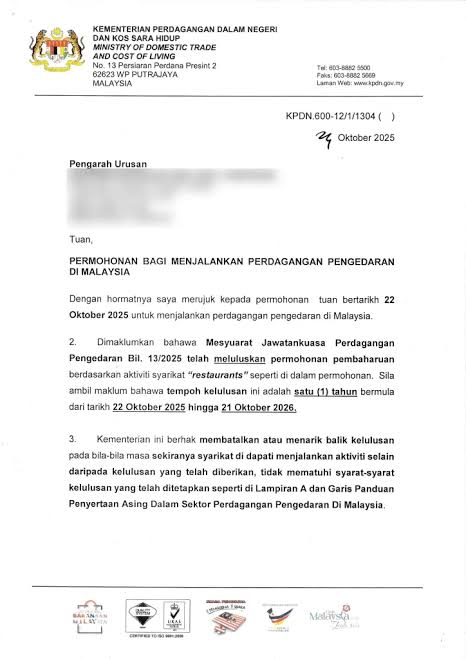
This is the very first thing we bring up as almost any business in Malaysia with minimum 51% foreign equity will need either a:
- Wholesale, Retail & Trade (WRT) license if it deals in trade sectors, OR
- Unregulated Services Sector (USS) license if it deals in services
Both require a paid-up capital of at least RM1 million (~ SGD315,000) which must be shown in the Malaysian company's bank statements at the time of application.
They are issued by the Malaysian Ministry of Domestic Trade (KPDN) to protect local SMEs from direct foreign competitors - so if you feel they make it impossible for smaller Singapore setups, that's what they're meant to do!
Of course, nothing is impossible, and in our experience, there are two known ways foreign ventures circumvent this license:
- enter Malaysia under our Malaysia Tech Entrepreneur Programme (MTEP)
- go into an incorporated JV with a Malaysian and give them at least 51% equity
As the first is limited to selected tech verticals and the second one effectively means you no longer control the company, neither option is for everyone.
If neither is viable or you want a 100% foreign owned business, a WRT / USS license is mandatory.
If you can meet this, we move to check if your industry has restrictions on foreign involvement.
2. Sector-Specific Requirements
Most industries in Malaysia don't have specific needs, but some have rules that affect a foreign party's ability to do business, including:
- equity limits
- staff qualifications and nationality
- premise and facility requirements
- more!
We can't cover all of them, but one of the most common enquiries we get from foreigners is to set up a recruitment agency, which requires what’s known as an APS license from our Labour Department.
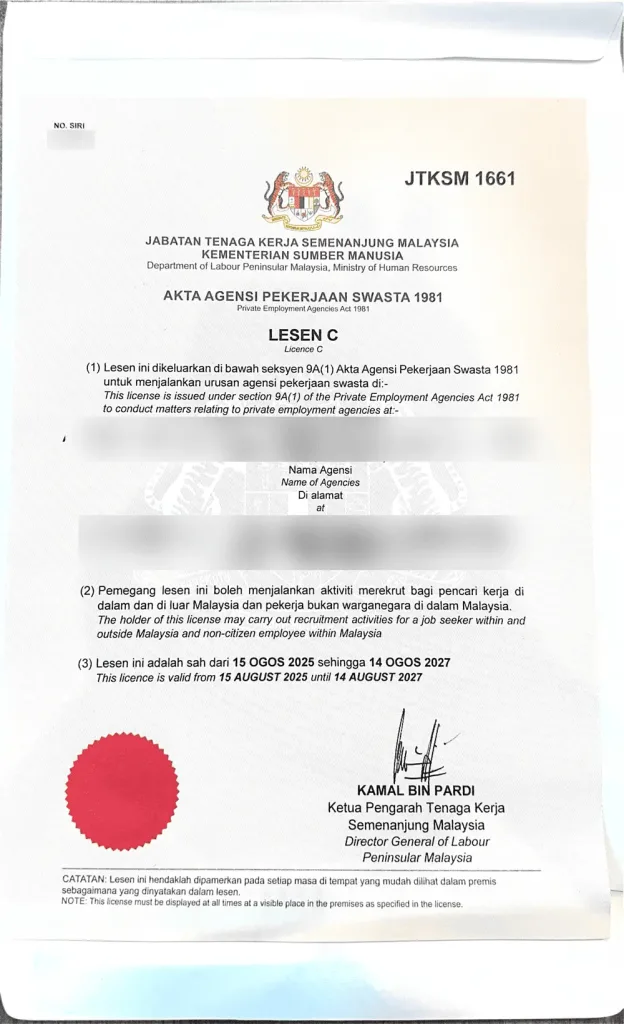
Then we need to tell them JTK restricts foreign ownership in recruitment agencies to 49% at most (but hey, at least no more USS license!)
Some are willing to comply with these requirements; others say no thank you. The point is to know what you're getting into beforehand.
We've got guides on quite a few businesses, so see if we've covered your intended venture:
- restaurant
- tuition centre
- language centre
- childcare centre
- clinic
- factory
- vocational training centre
- travel agency
If yours isn't listed, we may just not have gotten round to writing it yet, so drop us a message!
But we digress - once industry requirements are addressed, the next step is determining where in Malaysia your premises will operate.
3. Determine Your Physical Operation Site
Industry licenses are issued federally and are uniform across Malaysia, but licenses to operate from a premise and display a signboard are issued by district level Local Authorities (PBTs).
Think of a PBT as the 'last mile' of your business setup - unless you meet their premise and signboard requirements, you won't be able to actually operate.
Many Singaporeans tell us they want to operate in Johor, but Johor has 16 different PBTs!

Each has slightly different requirements for businesses, and if nothing else we need to know which one yours falls under, so we know where to submit the application!
Only once aware and comfortable with all this do we move on to business entity options.
4. Choosing The Right Business Entity

Singapore business owners have two main choices of structure in Malaysia:
- a foreign branch of your Singapore Pte Ltd, or
- a locally incorporated Malaysian Sdn Bhd
A branch is a direct extension of your Pte Ltd that’s faster and cheaper to set up but has two major tradeoffs:
- The Singapore parent is liable for the branch's legal commitments (including debts!)
- The branch cannot conduct business that differs from the Pte Ltd
A Sdn Bhd is a locally incorporated company whose shares are owned by you personally or your Pte Ltd (aka a foreign-owned subsidiary).
It's more expensive to set up, but owners are shielded from its debts and legal commitments, and the venture is free to diversify as the market demands - for obvious reasons, this is the structure most long-term operations typically opt for (like the example above).
Our subsidiary vs branch comparison explores this further, but we'll proceed assuming you’re going with a Sdn Bhd!
Registering A Sdn Bhd As A Singaporean
Sdn Bhds are registered with Suruhanjaya Syarikat Malaysia (SSM), our version of ACRA.
It's possible to do it yourself and our guide to DIY Sdn Bhd registration explains how if you’re interested.

Most foreigners just engage a local Company Secretary to do it for them since one of the statutory requirements is to appoint one within 30 days of incorporation anyways.
Now, if you engaged MISHU, we'd make sure you have these six things sorted out:
- proposed company names, with explanations if not in Bahasa Melayu or English
- up to three MSIC codes and a 200-word nature of business description
- a Malaysian registered address
- one director who ordinarily resides in Malaysia (more on this below)
- one shareholder (individual, or corporate such as your Pte Ltd)
- RM2,500 (~ SGD790) in paid-up capital, share price, number of shares, and ownership proportions
While officially RM1 paid-up capital is enough to incorporate, our experience is that banks typically only approve accounts when they see at least RM2,500, so we treat that as the effective minimum to do business.
See how low the requirements to register a business are - that's why we always run through everything else first!
The Resident Director Rule
Malaysia requires at least one director whose principal place of residence is in Malaysia. A Singaporean who actually lives in Malaysia on a valid long-term pass, such as an Employment Pass, can qualify.
Nominee Director Option
For businesses that cannot source a resident director, a nominee is a locally residing individual appointed as a director in name to fulfil SSM's requirements.
Both sides typically sign a nominee agreement that strips the nominee of usual director powers like accessing company finances and making decisions.
It carries risks for both sides, more so for the nominee, and due to bad experiences, MISHU no longer provides this service, but many Company Secretarial firms do.
What About Labuan Companies?
The MISHU team facilitates Labuan company incorporations as well, and we’ll keep this part short - as a business vehicle, they're intended for international business activities or Labuan-based operations.
If your goal is to sell to Malaysian customers, a Labuan company is not a viable option.
Now for the final consideration: work passes!
5. Planning For Employment Pass Applications
We always end by asking if you or any Singaporean staff will be relocating to Malaysia to support the expansion hands-on - for long-term roles, that means Employment Passes (EPs).
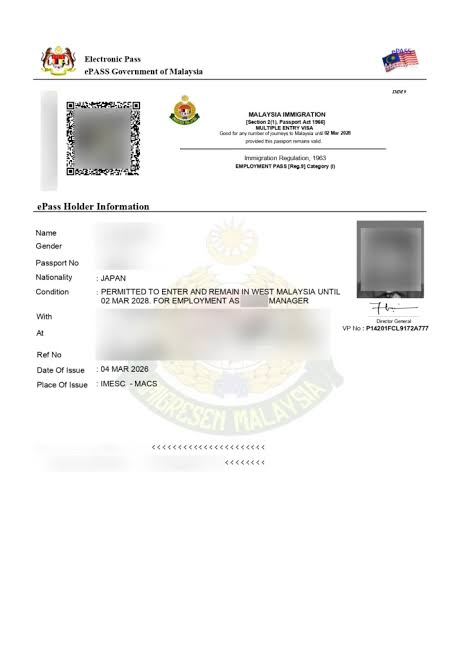
Our EP application guide covers this in full, but briefly, your Malaysian outfit must meet fairly strict requirements:
- EP monthly salary requirements:
- registering an employer account with the Expatriate Services Division
- preparing, submitting, and tracking EP applications
- keeping records for EP renewals
Alternatively, a Malaysian Professional Visit Pass (PVP) addresses a different kind of need.
In contrast to an EP, a PVP carries no minimum salary requirements, but is short-term and non-renewable, and does not allow bringing family members.
Like we said, expatriate work passes are their own rabbit hole, and it's crucial to plan for them before registering your business in Malaysia.
That's it from us, and we wish you all the best with your Malaysian venture!

Dean Cheong is a Singapore-based commercial growth architect and CEO of VOffice, known for helping B2B companies turn fragmented sales efforts into predictable revenue systems. He specializes in sales process optimisation, CRM-driven visibility, and market entry strategy, combining execution discipline with a strong academic grounding in business banking and finance from Nanyang Technological University. His focus is on building repeatable, data-backed growth frameworks that companies can scale with confidence.