
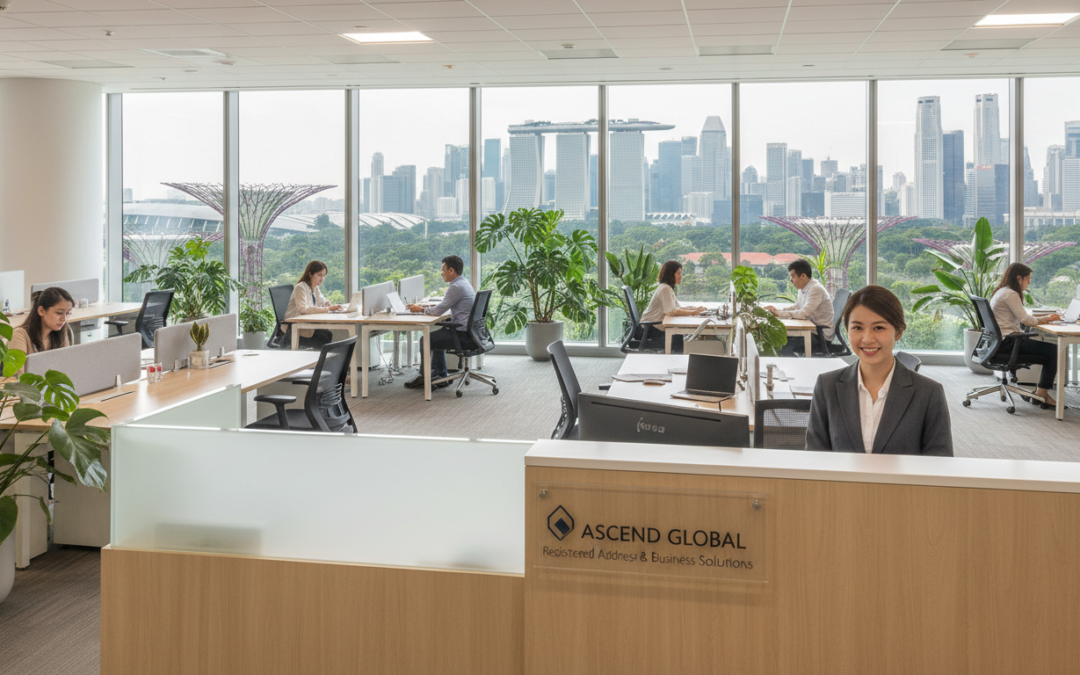
Need a trustworthy business front without the high lease? This commercial buyer’s guide shows founders, remote-first teams, SMEs, freelancers and overseas firms how to secure an affordable, compliant registered address that keeps legal risk low and brand credibility high.
Rising office rents and a workforce that favours remote work have pushed many to consider a virtual office. These services give you a professional physical address plus mail and call handling, without renting a full-time workspace.
This guide explains what a virtual office is, ACRA rules, cost and feature comparisons, hidden fees and how to shortlist providers. You will learn to prioritise compliance first, then workflow fit (mail, calls, meetings), and finally location and reputation.
We cover provider types from premium CBD suites to budget annual plans and mail-first specialists, so you can choose the plan that suits your business needs and reduces overhead without sacrificing reliability.
Key Takeaways
- Choose compliance first to avoid regulatory risk.
- Match mail, call and meeting workflows to your daily needs.
- Compare true value, not just headline price.
- Watch for hidden fees and contract terms.
- Shortlist providers by location, reputation and service mix.
Why affordable registered addresses are in demand in Singapore right now
With rent and fit‑out bills climbing, many firms seek a leaner way to keep a professional front. Remote and hybrid teams mean full-time desks sit empty, yet companies still need a legal location for vendors and official mail.
High office costs and the shift to remote work
High lease commitments and fit‑out expenses push small teams to cut fixed overheads. Replacing permanent office space with a flexible solution reduces monthly outlay while keeping compliance intact.
Who benefits most
- Startups: protect runway by avoiding long leases.
- SMEs: professionalise admin without hiring reception staff.
- Freelancers: separate home life from client-facing contact details.
- Overseas companies: gain credibility and a local touchpoint for onboarding.
Practical pain points — missed mail, privacy concerns and inconsistent vendor addresses — drive uptake. A virtual office offers a stable corporate contact while teams work from anywhere, making it a sensible alternative to leasing office space for daily desks that go unused.
What a virtual office in Singapore is and what it is not
A virtual office gives your firm a real business address for official mail and filings, plus basic mail handling and optional phone services. It creates a professional front without occupying the physical office space every day.
It is not a dedicated daily desk, a full serviced office suite, or a substitute where regulated, walk-in operations must run from-site. If you need constant office presence, a coworking or serviced solution is the better fit.
How virtual offices, coworking and serviced offices compare
- Access: Virtual offices offer address use and occasional meeting-room access. Coworking gives hot desks; serviced offices provide private suites.
- Privacy: Virtual offices keep home details private. Coworking is shared; serviced offices are private and secure.
- Cost: Virtual offices are the lowest ongoing cost. Coworking charges per day or monthly. Serviced offices have higher rents and staffing fees.
Typical inclusions and provider differences
Most packages include use of an office address for public listings, mail intake and notifications. Common add-ons are mail scanning, forwarding, phone answering and meeting-room hire.
Providers vary: some are mail-first with self-collection, others run staffed receptions and client lounges. For a buying checklist, focus on four feature categories: mail workflow, phone workflow, meeting access and admin support.
| Model | Core deliverable | Typical cost level | Best for |
|---|---|---|---|
| Virtual office | Business address, mail handling, optional calls | Low | Start-ups, freelancers, remote teams |
| Coworking | Hot desks, community, basic meeting rooms | Medium | Remote workers needing occasional desks |
| Serviced office | Private suites, reception, full services | High | SMEs needing daily on-site operations |
For further detail on compliance and choosing the right package, see our virtual office registered address guide.
ACRA requirements for a registered office address in Singapore
Every company must nominate a physical location that meets ACRA’s rules before listing an office on public records. A P.O. Box does not qualify: the law requires a genuine street address with a reachable presence.
Physical location and public access
Non-negotiable: the office must be a real, physical premises. It must be open to the public for at least three hours during normal business hours.
Confirm staffing and reception procedures. Ask if the provider logs visitor times and can host brief inspections or deliveries.
Receiving official correspondence reliably
Reliable mail handling means logged intake, secure storage and prompt notifications for statutory or government correspondence.
Request the provider’s SOP for time-sensitive letters, identity checks for collection and how they notify the company. Missed notices can cause penalties, filing delays or reputational harm.
Quick compliance checklist for buyers
- Is the location a physical office and not a P.O. Box?
- Are minimum public opening hours documented?
- Do intake logs, secure storage and notification policies exist?
- How are urgent government letters handled and escalated?
Affordable registered address singapore: how to define “affordable” without cutting corners
Price alone does not tell the full story. A sensible buyer frames affordability as total cost of ownership: subscription, add‑ons, time spent managing mail and the risk of missed deadlines.
Total cost of ownership vs headline monthly price
Headline pricing can be attractive. Yet annual-only plans, per-item forwarding fees or scanning charges quickly change the maths.
Convert annual plans to monthly equivalents and add likely usage — mail volume, forwarding and meeting hours — to reveal true costs.
Lock-ins and automatic renewals raise the effective price. Check upgrade fees, early termination penalties and renewal increases before signing.
“The cheapest plan is costly if it traps you into poor service or long notice periods.”
- Normalise prices: divide annual figures to compare monthly equivalents.
- Factor usage: estimate forwarding, scanning and meeting-room hours.
- Check exit terms: notice periods and refund rules matter.
Banking and KYC suitability as a buying criterion
For many companies, banks expect consistent proof of address and reliable receipt of statements. Choose a provider whose processes create an audit trail and can confirm mail handling for compliance.
No cutting corners: poor handling, missed mail or unclear logs can turn a low fee into a costly compliance problem.
Next: we compare mail handling, forwarding, scanning, calls, meeting access and support standards to help you shortlist the right virtual office provider.
Key services to compare across virtual office providers
Compare core services first — they determine how smoothly your daily admin runs.
Mail handling, notifications and secure storage
Expect timestamped intake, photographed proof and prompt email or app alerts for important post.
Ask: how long items are stored, where they are kept, and who may collect them.
Forwarding options and costs
Check local versus international forwarding, scheduled dispatch or on‑demand options, and weight or parcel surcharges.
Some providers use credits or top‑ups for shipping; others bill per item. Compare true costs for your likely volume.
Mail opening, scanning and digital delivery
Confirm whether the provider opens post, how scanning is priced (per item or flat plan) and the security of digital delivery.
Look for encrypted storage, searchable PDFs and retention policies that suit your business compliance needs.
Dedicated phone numbers, call answering and receptionist support
Decide between simple call forwarding, voicemail or a live receptionist using scripted message handling.
Ask for sample scripts and escalation rules so calls from clients are handled consistently.
Meeting room access, coworking lounges and pay‑as‑you‑go space
Compare included meeting hours, booking windows and hourly rates for larger rooms or AV equipment.
Day‑use lounges reduce cost if you need occasional face‑to‑face client meetings or hot desks.
Reception, secretarial and IT support
For client‑facing companies, check visitor handling, welcoming procedures and basic admin or secretarial help.
Also verify IT support availability for on‑site calls or meeting‑room setups.
- Quick comparison template: Intake & logging | Notifications | Storage duration | Forwarding rates | Scanning rules | Phone options | Meeting hours | Admin & IT support.
“Match services to workflows — the right mix saves time and prevents missed notices.”
Hidden costs to check before you buy a virtual office address
Before signing, know which low headline fees hide per-action charges that climb with usage. A clear fee schedule stops surprises and keeps compliance risk low.
Per-item fees, storage limits and parcel surcharges
Many plans include a small quota of mail handling, then charge per item. Common extras are per-item scanning, storage limits and disposal fees.
Parcels often incur surcharges for oversized items or courier processing. Some providers levy a handling fee after a free storage window expires.
Call forwarding rates and receptionist add-ons
Call services may look cheap until per-minute forwarding and setup charges appear. Phone-line tiers can bill by the minute for forwarded calls.
Live receptionist support or after-hours handling typically costs extra. Ask for examples of monthly bills with typical call volumes.
Meeting room hourly charges and equipment fees
Meeting rooms are usually priced by the hour. Straits Virtual Office lists rooms at SGD 20 per hour as a reference point.
Expect extra charges for AV, screens, printing and minimum booking blocks. Cancellation penalties can also raise costs.
| Hidden cost | Typical trigger | How it adds up |
|---|---|---|
| Per-item scanning | Each scanned envelope | Small fee × volume = large monthly spend |
| Storage overlimit | Items held beyond free window | Daily or per-item storage fee |
| Forwarding & packaging | International or express requests | Courier + packaging + handling surcharge |
| Call forwarding | Per-minute billing on certain tiers | High call volume → significant per-minute costs |
| Meeting room extras | Equipment, minimum booking, cancellations | Hourly hire + AV + penalties |
Estimate your month: pick a realistic mail volume, forwarding cadence and meeting frequency. Multiply likely per-item and per-action fees to model total costs.
Practical tip: request a full written fee schedule and ask for a sample invoice. If a provider shows only base prices, probe for hidden lines before you pay.
For a checklist of buying questions and further tips on choosing a virtual office, see choosing a virtual office.
Choosing the right business address in Singapore for credibility and clients
Selecting the right business address can reshape how clients and partners perceive your company. The choice affects brand image, trust and practical workflow like mail collection and meeting bookings.
CBD prestige vs reputable fringe districts
A CBD office often signals scale and stability to investors and high‑value clients.
When to choose CBD: investor‑facing firms, financial services and consultancies that rely on perception for trust.
When fringe works: reputable commercial districts such as regional business hubs give most customers a credible image while keeping costs and travel time lower.
Transport access and practical mail collection
Proximity to MRT stations, commuter routes and parking makes urgent mail collection straightforward.
Check opening hours and pick‑up procedures. A prestigious location is of little use if collecting parcels means long waits or complex ID rules.
When a multi-location presence adds value
Multiple locations help sales coverage and local partnerships. They offer visible presence in key neighbourhoods and can shorten delivery or meeting times.
Beware of added admin, invoices and mail streams. More sites raise operational overhead and complexity.
Decision prompts
- Where do your clients expect you to be — premium tower or local hub?
- How often will you visit to collect mail or host customers?
- Do you need meeting space and receptionist services on site?
| Factor | CBD | Fringe / Regional |
|---|---|---|
| Perceived credibility | High for investors and corporates | Good for local customers and SMEs |
| Mail & collection convenience | Central but may be busy | Often easier parking and faster collection |
| Cost vs benefit | Higher cost; strong image | Lower cost; practical for operations |
| Best for | Financial services, consultancies, investor relations | Local services, retailers, field teams |
“The best-looking location counts only if it supports quick mail handling and easy client access.”
Cheapest virtual office address options: realistic pricing benchmarks in Singapore
Price tags for virtual offices span a wide range and buyers need clear benchmarks to judge value.
Entry-level mail-first pricing vs premium CBD packages
Entry-level mail-first plans can show headline rates under SGD 10/month on multi‑year contracts. These usually include basic mail intake and app notifications only.
Premium CBD packages typically sit between SGD 128 and SGD 600/month. They add live reception, lounge and meeting access, and stronger on-site support.
What drives price: location, staffing, and included access
Key drivers are the prestige of the building, onsite receptionist hours, and how many meeting or lounge hours are bundled.
Contract length also alters monthly equivalents. An annual or multi-year plan can reduce the stated monthly price but may lock you into higher long-term costs if usage rises.
“Cheapest should be a starting point, not the final choice — compliance and reliability matter most.”
| Tier | Typical monthly range (SGD) | Core inclusions | Best for |
|---|---|---|---|
| Mail‑first entry | <10 (long contract) | Mail intake, notifications | Freelancers, low‑mail startups |
| Standard virtual office | 30–150 | Mail, basic calls, some meeting hours | SMEs, growing teams |
| Premium CBD package | 128–600 | Live reception, lounges, meetings | Investor‑facing business, consultancies |
| Pay‑as‑you‑go | Varies | Low base + per‑use meeting/call fees | Teams with irregular office needs |
Practical tip: benchmark providers by estimated monthly total — include likely meeting hours and forwarding fees. A low base plan plus frequent add‑ons can cost more than a higher tier with inclusive services.
Provider spotlight: Servcorp virtual office Singapore packages
A well‑executed virtual office package delivers not just mail handling but a complete client‑facing experience. Servcorp positions itself as a premium option for firms that need a polished reception and credible business presence.
Prestigious locations and who it suits
Servcorp operates in Marina Bay Financial Centre, CapitaGreen, The Metropolis and Suntec Tower Three. These offices amplify credibility during investor meetings and partner onboarding.
Who it suits: client‑facing consultancies, international firms and companies that value reception support and brand presence.
Typical inclusions buyers care about
Core services include mail handling and courier receipt, a local phone number with live receptionist answering in your company name, plus lounge and coworking access.
Meeting rooms and IT support are available on a pay‑as‑you‑go basis for sales meetings, contract signings and investor presentations.
| Location | Typical inclusions | Best for |
|---|---|---|
| Marina Bay | Reception, mail, lounge access | Investor‑facing teams |
| CapitaGreen | Phone, mail handling, coworking | Regional HQs |
| Suntec / Metropolis | Reception, meeting bookings, IT support | Professional services |
Pricing range and contract flexibility
Pricing bands run from SGD 128 to SGD 600. Packages vary by included lounge time (e.g. 1 hr/day on an Address package; 3 hrs/day on a Virtual Office package) and by the extra services bundled.
Contracts are available monthly, 6‑month or 12‑month, giving businesses flexibility to scale without long lock‑ins.
“A premium virtual office reduces logistical friction and presents a professional front when it matters most.”
Provider spotlight: VOffice virtual office address for budget-conscious businesses
A simple virtual office package can cover statutory needs while keeping operations lean and predictable.
Annual packages and what each level includes
Economy — SGD 57/year: business address, email mail alerts and self-collection. No setup fee; online sign-up only.
Business — SGD 97/year: everything in Economy plus shared fax and 4 hours of meeting room use. Optional weekly local forwarding via a SGD 30 mail credit top‑up.
VIP — SGD 197/year: adds 8 hours meeting and 8 hours office room use. Optional weekly local forwarding (SGD 30 top‑up) or overseas forwarding (SGD 100 top‑up).
Mail alerts, self-collection, forwarding and meeting use
Mail workflow is straightforward: daily email alerts note incoming post and hold items for self-collection during published collection hours.
Forwarding is optional. When selected, VOffice schedules weekly dispatches using the chosen credit top‑up. Parcels and urgent courier requests may incur extra handling fees.
Pricing clarity and effective monthly cost
| Plan | Annual (SGD) | Effective monthly |
|---|---|---|
| Economy | 57 | ~4.75 |
| Business | 97 | ~8.08 |
| VIP | 197 | ~16.42 |
Buyer questions to ask: collection hours, maximum storage time, parcel handling rules, whether mail scanning is included, and any per-item fee for opening or forwarding.
- Best fit: startups and solo operators with low mail volumes who prioritise cost control and need a compliant company address.
- Consider: if you need frequent meeting time or regular scanning, higher-tier packages or alternative offices may offer better value.
“No setup fees and annual billing make VOffice a clear option for founders who can plan ahead.”
Provider spotlight: Straits Virtual Office for Suntec City presence
Straits Virtual Office positions itself as a mid-range choice for businesses that want a Suntec City business presence with structured annual plans and clear upgrade paths.
Packages, phone line options and mail services
The 12-month plans are straightforward. The Premium plan is S$13.99/month and covers an office address, mail alerts and shared fax. It suits companies that need a compliant business address and basic notifications.
The Professional tier at S$45.99/month adds a dedicated phone line. Call forwarding is available but billed per minute, so factor in call volumes before you upgrade.
The Plus plan (S$17.99/month) targets foreign companies. International forwarding is possible for extra fees and there are business‑specific options like cheque deposit at S$10 per cheque.
Meeting room costs and scanning add-ons
Meeting rooms are priced at S$20/hour. Frequent client meetings will materially raise monthly costs, so compare pay-as-you-go meeting spend to bundled packages elsewhere.
Mail opening and digital scanning is an add-on at S$13/month. For remote teams, scanned PDFs speed decision-making and cut travel time for collections.
| Plan | Core inclusions | Notes |
|---|---|---|
| Premium (S$13.99) | Business address, mail alerts, shared fax | Good starter option |
| Professional (S$45.99) | + Dedicated phone line | Call-driven businesses add this |
| Plus (S$17.99) | For foreign companies, intl forwarding opt. | Cheque deposit S$10/cheque |
Operational note: mail workflows include notifications and self-collection with optional forwarding. Add-ons like cheque handling and scanning matter to firms with physical post or banking needs.
“Verify call forwarding rates, collection security and all add-on charges in writing before you sign.”
Straits offers a recognisable location and convenient meeting option. For many small businesses, it balances credibility with controlled costs — provided you check per-minute forwarding and the provider’s collection security policies in advance.
Provider spotlight: SnapMail for mail and parcel handling-heavy businesses
SnapMail is built for firms that prioritise logistics and predictable mail workflows over reception flair. Its plans focus on reliable intake, fast forwarding options and clear per‑item rules so teams that receive frequent post can budget with confidence.
Plan options across different contract lengths
Tiered pricing scales by commitment. Short contracts (1 month) cost more per month while longer terms (12–36 months) lower the monthly pricing. Example bands: S4 (~SGD 6–12/month), S3 (~SGD 8–25/month with handling of 10 letters/month) and B1 Premium (~SGD 20–40/month with a dedicated physical letterbox and 10 incoming items handled).
Forwarding, scanning, and self-collection points
Mail and parcel handling includes receiving, secure holding, optional opening and scanning, forwarding and secure disposal. SnapMail offers six free self-collection points across the island, which is useful for teams that prefer regular physical pick‑ups.
Per‑item allowances (for example, 10 letters/month) cut unpredictable fees for mail-heavy businesses and make monthly costs easier to forecast.
When a money-back guarantee reduces purchase risk
Risk reduction: a 30‑day money‑back guarantee lets buyers test turnaround, responsiveness and service quality before fully committing. That trial period is especially valuable if your business depends on timely forwarding or scanning.
Best fit: e‑commerce sellers, mobile teams and firms that need dependable logistics and forwarding rather than meeting-room ambience. For more flexible virtual office services and meeting options, compare SnapMail with other providers or explore our detailed virtual office packages at VOffice virtual office services.
Provider comparison checklist: how to shortlist the best virtual offices in Singapore
A short, focused checklist helps you cut through pitch decks and pick providers that meet both legal needs and daily workflows.
Compliance checks to confirm before signing
Confirm the office is a physical location with public access for at least three hours. Get written permission to use the address for company filings.
Verify how statutory mail is received, logged and escalated. Compliance must be non-negotiable.
Service workflow fit: mail volume, calls, and client meetings
Estimate monthly mail and parcel counts. Decide if you need scanning, digital delivery or regular forwarding.
Define call-handling scripts, voicemail needs and how often you require meeting rooms.
Reputation signals and operational transparency
Check verified reviews, response times and sample SOPs. Ask for a sample mail log and the escalation path for urgent post.
Request a clear fee schedule to spot hidden per-item charges.
- Run compliance checks on 5 candidates.
- Score workflow fit and reputation.
- Narrow to 2–3 providers for trial or short-term signup.
| Check | What to ask | Why it matters | Weight |
|---|---|---|---|
| ACRA fit | Public hours; written use permission | Legal filings and inspections | 30% |
| Mail workflow | Log format; scanning & forwarding fees | Timely receipt of correspondence | 25% |
| Call & meeting | Reception scripts; meeting hourly rates | Client experience and access | 15% |
| Fees | Sample invoice; hidden charges | Cost predictability | 20% |
| Reputation | Reviews; response time evidence | Operational reliability | 10% |
“Weight compliance and reliability highest, then cost predictability, then location and image.”
Which virtual office package fits your business type
Selecting the right virtual office package starts with a clear list of daily workflows. Map your mail, call and meeting patterns before comparing tiers. That helps you avoid paying for extras you never use or under‑buying and risking missed notices.
Startups optimising cash flow while staying compliant
Best fit: entry or standard package that covers a business address, reliable mail logging and notifications.
Prioritise low monthly cost, clear mail workflows and scalable add‑ons for calls or meeting hours as client contact grows.
SMEs needing a professional business address Singapore customers trust
Best fit: standard or premium package with a local business address and receptionist support.
SMEs benefit from a polished image that supports sales and vendor onboarding. Choose a package that bundles meeting hours and a phone line if teams are distributed.
Overseas companies establishing a presence for onboarding and credibility
Best fit: packages with forwarding, scanning and dedicated support for statutory mail.
Prioritise prompt scans and international forwarding so overseas decision‑makers receive documents quickly and trust your local presence.
Home-based operators prioritising privacy and separation of addresses
Best fit: mail‑first plans that keep your home details private while providing a compliant business address for filings.
Look for clear collection rules and secure storage to avoid personal exposure and ensure continuity.
Selection prompts — estimate expected mail per month, need for a phone line, frequency of client meetings, and whether staff will collect mail in person. Use these prompts to shortlist packages that match real work, not marketing copy.
| Business type | Suggested package level | Key inclusions | Selection prompt |
|---|---|---|---|
| Startups | Entry / Standard | Business address, mail logging, notifications | How many items/month; need for meeting hours later? |
| SMEs | Standard / Premium | Reception, phone, meeting hours | Do customers expect face‑to‑face or a local phone line? |
| Overseas companies | Standard with forwarding | Scanning, intl forwarding, support | Who receives statutory mail overseas and how fast? |
| Home‑based operators | Mail‑first | Secure storage, self‑collection, privacy | How often will you collect or need scans? |
“The right package reduces admin friction and protects business continuity.”
How to buy the right virtual office service without regrets
Buyers avoid regrets by turning vague promises into a clear service specification before signing. Follow a short, practical process to check legal fit, daily workflows and contractual flexibility.
Prepare your requirements: compliance, mail workflow, and meeting needs
Step 1 — confirm compliance essentials: ensure the office is a physical location that meets ACRA public‑access rules and can receive government correspondence reliably.
Step 2 — define mail and handling cadence: estimate items per month, how often you need forwarding or scanning, and who will collect.
Step 3 — quantify meeting needs: list monthly meeting hours, AV needs and receptionist support required for client visits.
Questions to ask providers about logging, security, and turnaround times
- How is incoming mail logged and how fast are notifications sent?
- Where is post stored and who may collect it? Is third‑party collection allowed?
- Do you offer same‑day scanning and what are cut‑off times for forwarding dispatch?
- What are typical response times for support tickets and urgent government letters?
Final review: contract terms, upgrades, and exit options
Check renewal pricing, upgrade paths, meeting room fees, and add‑on charges. Confirm notice periods and an exit option if service underperforms.
Practical check: if the aim is to avoid long rental or space commitments, ensure the contract does not reintroduce rigid terms.
“Get written confirmation of office address use, a transparent fee schedule, and a workflow that mirrors how your business actually operates.”
- Score providers on compliance, mail handling, meeting access and costs.
- Trial the top candidate or start monthly to validate service.
- Go/no‑go: proceed only if you have written permission to use the address, clear fees, and a tested workflow.
Conclusion
,Choose a virtual office that first meets ACRA rules and proves reliable for official correspondence. Prioritise a physical business address with public hours, clear mail logging and prompt notifications.
Compare true monthly costs, not just headline pricing. Include forwarding, scanning, meeting hours and per‑use fees when you tally value and overall costs.
Match location to client expectations: CBD packages buy image and receptionist support, budget annual plans cut fees, and mail‑first providers suit parcel‑heavy teams.
Final steps: shortlist 2–3 providers, request written terms and full fee schedules, and confirm public access hours plus mail handling SOPs. Start with core services and upgrade packages as meetings, calls and client needs grow.
Result: a professional business presence and dependable mail handling without unnecessary rental or daily office space.
FAQ
What is a virtual office and how does it differ from coworking or a serviced office?
Can a P.O. Box be used to satisfy ACRA’s registered office requirement?
What minimum opening hours must a registered office have for public accessibility?
How do mail handling, scanning and forwarding usually work with virtual office packages?
What hidden costs should I watch for when choosing a virtual office provider?
Is a virtual office address acceptable for bank KYC and opening corporate accounts?
How should I compare the total cost of ownership versus the headline monthly price?
What location factors influence credibility and client perception?
Which services are most important for SMEs and startups when selecting a provider?
How do entry-level mail-first packages compare with premium CBD packages?
Are there providers that specialise in heavy mail and parcel handling?
Can I use a virtual office address for multiple company registrations or branches?
How flexible are contracts and what notice periods should I expect?
What technical and security measures should I ask providers about?
How do meeting room costs typically work and what extras might apply?
Which providers offer prestigious addresses and live receptionist services in Singapore?
Are there budget-friendly providers for businesses prioritising cost control?
How important are online reviews and reputation when choosing a virtual office?
What should home-based operators consider when signing up for a virtual office?
Which questions should I ask providers before making a purchase?

Dean Cheong is a Singapore-based commercial growth architect and CEO of VOffice, known for helping B2B companies turn fragmented sales efforts into predictable revenue systems. He specializes in sales process optimisation, CRM-driven visibility, and market entry strategy, combining execution discipline with a strong academic grounding in business banking and finance from Nanyang Technological University. His focus is on building repeatable, data-backed growth frameworks that companies can scale with confidence.