
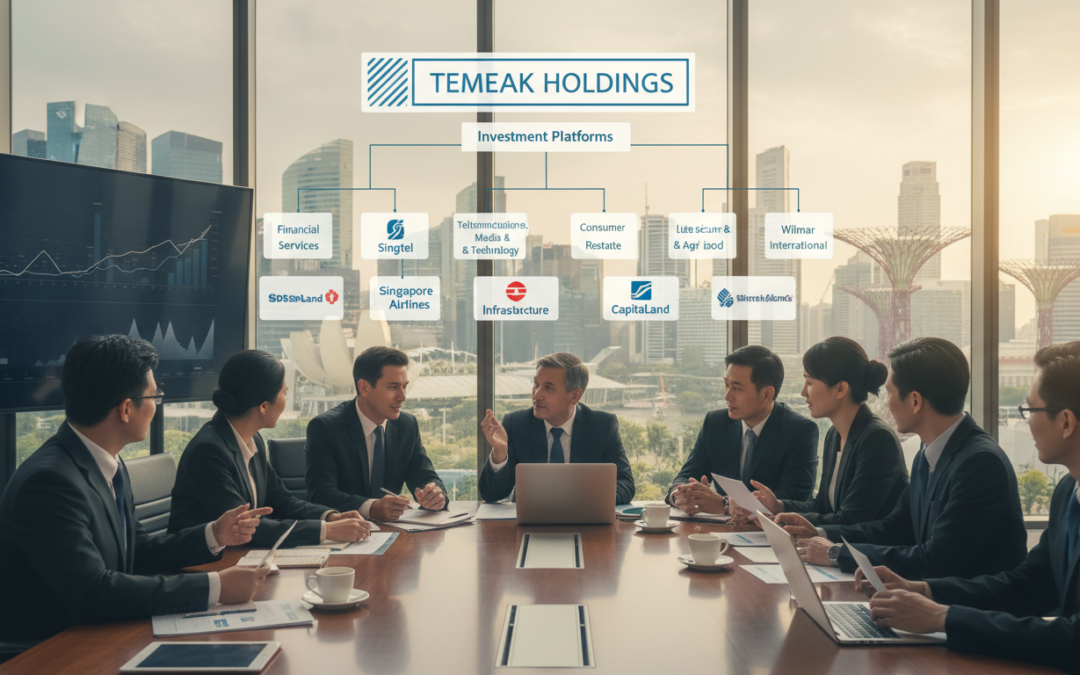
Question: Could a well‑placed holding entity reshape the way you manage regional assets and reduce your overall tax burden?
This introduction explains what you will learn about the local holding framework in 2026. It sets out how the design supports ownership, control and tax‑efficient deployment of capital across subsidiaries and portfolios.
Who this guide is for: international investors, founders and finance leaders who compare a holding company setup here with other jurisdictions for expansion and portfolio management.
Expect a clear scope: the common legal form (Pte Ltd), tax treatment, double taxation agreements, tax residency, asset protection, ACRA incorporation and ongoing compliance. We also flag recent changes — notably the foreign asset disposal gains rule effective 1 January 2024 — and why it matters for future exits.
Finally, the piece outlines practical trade‑offs. Outcomes hinge on substance, correct income classification and disciplined documentation. Read on for a concise roadmap from planning and incorporation to bank setup, tax filings and governance.
Key Takeaways
- The framework combines a predictable tax regime with strong legal protections.
- Most holding entities earn passive income rather than run day‑to‑day operations.
- Recent rules on foreign asset disposals affect exit planning from 2024.
- Substance and documentation are crucial to secure intended tax benefits.
- The roadmap covers planning, incorporation, banking, tax and governance steps.
Understanding the Singapore investment holding company structure
A clear grasp of the parent entity’s role helps managers decide how to hold and protect cross-border assets.
What an investment holding company is in Singapore
An investment holding company is set up primarily to own and manage investments rather than sell goods or provide services. It exercises ownership rights over shares and other assets and focuses on portfolio oversight and capital preservation.
How it differs from an operating company
Operating firms earn revenue from sales and daily operations and need larger staff and operational systems. By contrast, a holding company earns portfolio income, requires leaner staffing and reports differently for tax and compliance.
Typical assets and income streams
Common assets include shares in private and listed firms, bonds, cash deposits, real estate and intellectual property such as trademarks and patents.
- Income sources: dividends, interest, rental receipts and gains on disposal.
- Note: tax outcomes depend on whether receipts are classed as investment or trading income.
Group ownership and practical points
A parent may own local or overseas subsidiaries, enabling regional expansion while keeping central oversight. Good governance, board meetings and clear records are vital to sustain preferred tax and legal outcomes.
Holding company Singapore: structures you can use in 2026
Choosing the right legal vehicle in 2026 shapes how you centralise group assets, tax outcomes and governance.
Investment vs operating parent models
An Investment Holding Company (IHC) primarily earns passive returns—dividends, interest and capital gains. By contrast, an Operating Holding Company (OHC) runs group-level services, charges management fees and may employ staff.
That distinction matters. Where intercompany fees exist, tax authorities may reclassify receipts as trading income, increasing compliance and documentation needs.
Financial groups and MAS approval
A Financial Holding Company is a regulated category and needs written MAS approval. Prudential rules and reporting make this option impractical for most non‑banking groups.
Why a Pte Ltd is usually preferred
Pte Ltd offers limited liability, clear governance under the Companies Act and familiarity with banks and counterparties. It supports foreign ownership and straightforward director duties.
Decision checklist for 2026:
- sources of income and likely exits;
- whether staff/functions will be centralised in Singapore;
- if subsidiaries operate in regulated sectors requiring approval.
For practical workspace and meeting needs while planning entity setup, consider a flexible meeting and training room rental.
Why companies choose Singapore for holding companies
Multinational groups pick this jurisdiction as a regional base because it combines legal certainty with a mature financial ecosystem. Beyond tax rules, firms value transparent regulation, robust courts and deep professional services that make complex group setups reliable.
Global financial centre advantages
Advanced banking and capital markets support multi‑currency accounts, cross‑border cash management and financing for portfolio initiatives. This makes it easier for a holding company to execute deals and manage liquidity across time zones.
Regional control tower for ASEAN growth
As a credible centre, it functions as a single point of ownership and governance while local subsidiaries run day‑to‑day operations. That central role simplifies due diligence, investor communications and post‑deal integration.
“A stable parent entity streamlines onboarding with banks, service providers and counterparties, lowering friction for international transactions.”
Practical outcome: counterparties and investors often prefer entities incorporated here because governance and shareholder rights are clear and enforceable. Those reputational benefits translate into smoother bank relationships and faster execution for business expansion.
Key tax benefits for a Singapore holding company
Tax rules shape net returns for a parent entity. Below are the practical points you need when weighing options for group cash, dividends and exits.
Headline rate and incentive relief
Headline corporate tax is 17% and targeted incentives can cut the effective rate for qualifying firms. Grant schemes and tiered exemptions may lower payable tax for active management functions and qualifying income.
No general capital gains tax — but watch trading facts
The jurisdiction generally exempts capital gains. Long‑term disposals are often capital in nature.
However, frequent buy/sell activity or dealer‑style conduct can cause gains to be treated as trading income and taxed.
Dividends, foreign exemptions and the 15% test
- Single‑tier system: taxed profits carry no further corporate tax on distribution.
- Dividends received by a tax‑resident parent are efficient when conditions are met.
- Foreign‑sourced dividends may be exempt if the foreign tax is at least 15% or the income is otherwise subject to tax abroad.
| Aspect | Typical outcome | Notes |
|---|---|---|
| Headline tax | 17% | Incentives may reduce effective rate |
| Capital gains | Usually exempt | Exception: trading income classification |
| Dividends | No withholding | Single‑tier; repatriation efficient |
“From 1 January 2024, gains from disposal of foreign assets received locally may be taxable unless exemptions apply.”
Caution: benefits depend on facts, residence, substance and records. Good governance and documentation are central to securing intended tax benefits.
Double Taxation Agreements and Singapore tax residency requirements
Effective use of double tax agreements and residency proof protects group cashflows from excessive withholding.
How DTAs help on cross-border payouts
DTAs reduce withholding on dividends, interest and royalties. For a holding company this means higher net receipts and cleaner cash repatriation across entities.
Accessing treaty relief in practice
Treaty benefits are not automatic. Foreign authorities commonly require evidence of tax residence and beneficial entitlement before granting reduced rates.
The control and management test
Residency depends on where strategic decisions are actually made. Key approvals — investment, disposal and dividend policy — should be taken at board meetings held locally.
Board substance and supporting documents
Substance typically includes directors attending meetings in person or by video, contemporaneous minutes, and clear delegation records. These documents support COR applications and cross‑border claims.
| Requirement | What shows compliance | Why it matters |
|---|---|---|
| Control & management | Board minutes, resolutions | Determines tax resident status |
| Certificate of Residence | COR from tax authority | Used to claim treaty rates |
| Practical pitfalls | Rubber‑stamp meetings offshore | May invalidate relief |
“Keep clear minutes and routine records; they are often decisive in cross‑border tax reviews.”
Asset protection and risk ring-fencing within a holding structure
Protecting group value often begins with how you place high‑risk operations and prized assets across separate legal entities.
Limited liability and separation between parent and subsidiaries
Limited liability means creditors of an operating firm usually cannot pursue the parent for ordinary trade debts. The parent may lose invested capital, but it will commonly avoid direct liability for subsidiary claims.
Ring-fencing high-value assets such as IP and property
Groups frequently place patents, trademarks and real estate in dedicated asset entities. Those entities then licence or lease the assets to trading firms.
This model isolates valuable assets and makes sale or financing simpler. A clean sale of an asset entity is often easier than carving assets out of an active business.
What asset protection does not cover
Asset separation is not a shield for fraud, negligence, wrongful trading, or unpaid taxes. Regulators and courts can pierce the veil where directors act improperly.
Good governance — clear contracts, robust board minutes and compliance routines — is the practical defence that makes ring‑fencing credible.
“Legal form must be backed by substance: contracts, oversight and records are what keep assets insulated in practice.”
International holding company setup requirements in Singapore
Before incorporation, a small checklist makes registration smooth and reduces delays with banks and regulators. Below are the practical requirements you must satisfy to form a compliant parent entity and open corporate accounts.
Resident director, shareholders and paid-up capital basics
Resident director: At least one director must be a resident (an individual ordinarily resident, or a local permanent resident). This person must be 18 or older and able to attend board meetings that substantiate control and management.
Shareholders: You need at least one shareholder, which may be an individual or another legal entity. 100% foreign ownership is permitted, but clear governance and beneficial‑ownership records help with banking KYC.
Paid-up capital: The statutory minimum is S$1. In practice, groups often set higher capital to match business plans, reassure banks and support early transactions.
Resident company secretary and registered local address
Company secretary: A resident secretary must be appointed within six months of incorporation. Secretarial support keeps registers, minutes and filings up to date from day one.
Registered address: A local registered address is mandatory for statutory notices and service. It must be a physical address—P.O. boxes are not acceptable.
Corporate bank account and real-world banking expectations
Opening a corporate bank account involves strict KYC/AML checks. Expect requests for original identity documents, proof of source of funds and possibly in‑person meetings with beneficial owners or directors.
Tip: Start bank engagement early. Pre‑arrange certified documents and clear ownership records to reduce onboarding friction and speed account activation.
How to set up a holding company in Singapore via ACRA BizFile+
Start the registration journey by reserving an acceptable company name and preparing core documents before you log into BizFile+.
Choosing and reserving a company name
Pick a clear, non‑offensive name that does not infringe trademarks or mimic regulated entities. A name application typically costs S$15. Once approved, the name is reserved for 60 days to complete incorporation.
Documents you will typically need for incorporation
Gather verified ID for directors and shareholders, the proposed constitution, registered address details and planned share allocation.
Also prepare director consent forms and the company secretary’s appointment details to meet statutory requirements.
ACRA submission process, fees, and timelines
- Reserve the name (S$15) and confirm reservation window.
- Log into BizFile+, complete the online application and upload the documents.
- Pay filing fees and any agent charges, then submit for review.
When documents are consistent, approval often takes 1–3 business days. Common delays arise from mismatched ID, unclear address proof or missing consent forms.
Post‑incorporation essentials: registers and record‑keeping
From day one, maintain statutory registers, written resolutions and minutes. Record share issues, director appointments and the registered address in the registers.
Good record keeping simplifies bank onboarding, tax filings and audits. Clear books reduce future compliance risk and speed account opening with banks.
| Stage | Action | Typical timing |
|---|---|---|
| Name reservation | Apply via BizFile+; pay S$15 | Immediate approval; reserved 60 days |
| Document upload | ID, constitution, address, share details | Same day if prepared |
| Incorporation approval | Submit application and fees | 1–3 business days when complete |
| Post‑incorporation | Registers, resolutions, secretary appointment | Immediate — maintain ongoing |
“Well‑kept records from day one make later bank and tax interactions straightforward.”
For a practical guide on entity setup and next steps, see our detailed note on setting up a holding company.
Tax and accounting treatment for investment holding companies
Distinguishing passive portfolio receipts from trading profits is central to correct annual tax reporting.
What counts as investment income versus trading income
Investment income commonly includes dividends, interest, rental receipts and disposal proceeds held long term.
Trading income arises when activity shows dealer conduct — frequent purchases and sales, short holding periods, or an intention to profit from resale.
Tax authorities assess frequency, purpose, holding period and the operational pattern when classifying receipts.
Deductible expenses commonly claimed
Allowable deductions normally cover financing costs linked to asset acquisition, audit and accounting fees, secretarial and tax filing fees, and bank charges.
Expenses must be supported by invoices, contracts, board resolutions and a clear nexus to the income‑producing activity.
When GST, transfer pricing and cross‑border reporting apply
GST becomes relevant if the parent provides chargeable services to group firms. An entity that only looks like a passive parent can still trigger extra obligations if it performs management tasks.
Transfer pricing requires related‑party loans, guarantees, fees and licences to be at arm’s length and documented in contemporaneous records.
| Issue | Typical treatment | Supporting documents |
|---|---|---|
| Dividends & interest | Usually passive income | Bank statements, share registers |
| Disposal gains | Capital unless trading facts exist | Deal files, holding period records |
| Financing costs | Deductible if linked to acquisition | Loan agreements, invoices |
| Related‑party fees | Must meet arm’s‑length test | Service agreements, TP study |
“Clear records and early structuring reduce the risk of reclassification and costly remediation.”
Ongoing compliance and operational management for holding companies
Routine governance and strict filing discipline are the backbone of a resilient parent entity. Keep an annual calendar for statutory deadlines: annual returns, accounts and maintenance of statutory registers.
Companies Act obligations and meeting records
File annual returns on time and keep registers current. Record board and shareholder decisions in clear minutes that show where major policy choices were made.
Financial statements, audit triggers and filing discipline
Prepare timely financial statements. Audits arise when size thresholds or group rules are met, so check criteria each year.
Subsidiary oversight and performance monitoring
Use standard reporting packs and KPIs to monitor subsidiaries without running day‑to‑day business. Set escalation paths for material risks.
International tax claims and residency
DTA qualification and foreign income exemptions depend on residency substance. Keep meeting minutes, COR evidence and consistent documentation to support claims.
| Area | Key task | Evidence |
|---|---|---|
| Registers | Update share and director registers | Signed entries, filings |
| Reports | Monthly/quarterly packs from subsidiaries | Standard templates, KPIs |
| Tax | Maintain residency and treaty records | Minutes, COR, bank statements |
Financial risk and daily operations
Manage currency and interest risks from dividends and intercompany balances. Keep bank mandates, authorised signatories and communications ready for audits and deals.
“Operational excellence makes future fundraising, disposals and regulatory reviews far simpler.”
For terms and practical service details, review the service terms.
Conclusion
Start with purpose, and define whether the parent will be passive or operational before any capital is moved.
Align governance, banking and tax around that choice. The main practical advantages remain: efficient dividend flows under the single‑tier system, possible foreign exemptions and generally favourable capital gains where receipts are capital in nature.
Results hinge on execution. Tax residency, board decisions taken locally and tidy records support treaty access and exemption claims.
Treat compliance as a strategic asset: well‑governed entities bank easier, transact faster and look better to investors and counterparties.
Next steps: confirm requirements, map your assets and subsidiaries, set governance routines and build a compliance calendar before the first deal. Factor in the 2024 rule on foreign asset disposal gains when you plan exits and cash repatriation.
FAQ
What is an investment holding company in Singapore?
How does an investment holding entity differ from an operating business?
What assets do holding companies commonly hold?
How do holding entities generate income?
What corporate vehicles are used for holding purposes in 2026?
When does a financial holding entity need regulatory approval from the Monetary Authority of Singapore (MAS)?
Why do many groups choose a Pte Ltd as the preferred vehicle?
What tax advantages are available for holding entities?
Is there a tax on capital gains?
How do double taxation agreements (DTAs) help international groups?
What determines if a company is tax resident here?
What is a Certificate of Residence and why is it important?
How does a holding setup provide asset protection and ring-fencing?
What are the limits of asset protection?
What basic requirements apply when setting up an international holding firm here?
FAQ
What is an investment holding company in Singapore?
An investment holding company is a private limited firm that owns shares, property, intellectual property or other assets. Its primary role is to hold and manage those assets on behalf of shareholders rather than run day-to-day trading operations. Directors focus on capital allocation, dividend policy and central governance.
How does an investment holding entity differ from an operating business?
A holding entity typically earns income from dividends, interest, royalties and asset disposals, while an operating business generates revenue from sales of goods or services. The holding entity has fewer employees and lower operating costs; the operating business manages production, customers and staff.
What assets do holding companies commonly hold?
Common assets include equity stakes in subsidiaries, commercial property, patents and trademarks, bonds and portfolio securities. Some groups also centralise cash, treasury functions and strategic licences within the parent company.
How do holding entities generate income?
Income streams include dividends from subsidiaries, interest on loans, rental income from property, royalty payments for IP and gains from disposals of capital assets. Passive returns often dominate, although occasional trading profits can arise.
What corporate vehicles are used for holding purposes in 2026?
The private limited company (Pte Ltd) remains the usual choice for its limited liability, recognised governance framework and ease of incorporation. Financial holding companies and specialised operating holding entities are alternatives, but banks and regulators may require additional approvals for regulated activities.
When does a financial holding entity need regulatory approval from the Monetary Authority of Singapore (MAS)?
MAS approval is necessary when the parent carries out regulated financial activities or controls significant licensed entities. Firms that consolidate supervised activities or intend to provide banking, fund management or insurance services should consult MAS guidance early.
Why do many groups choose a Pte Ltd as the preferred vehicle?
The Pte Ltd offers limited liability, clear statutory duties under the Companies Act, straightforward capital raising and widespread bank acceptance. It also supports robust governance and can claim tax incentives where eligible.
What tax advantages are available for holding entities?
Benefits include a standard corporate tax rate with various incentive schemes that can lower the effective rate, no dividend withholding tax on outward distributions and the absence of a general capital gains tax for qualifying disposals. Exemptions for certain foreign-sourced dividends may also apply subject to conditions.
Is there a tax on capital gains?
There is no general capital gains tax, but gains may be treated as trading income depending on the facts — for example, frequent trading or acquisition with intent to resell. Proper documentation and transfer pricing records help support a capital nature claim.
How do double taxation agreements (DTAs) help international groups?
DTAs reduce withholding tax on dividends, interest and royalties and prevent double taxation by allocating taxing rights between jurisdictions. They also provide mechanisms such as reduced rates and tax-credit relief for cross-border income.
What determines if a company is tax resident here?
Residency is judged by where control and management are exercised. Holding regular board meetings in the jurisdiction, maintaining minutes and making key strategic decisions locally helps establish tax residency for the firm.
What is a Certificate of Residence and why is it important?
A Certificate of Residence is official evidence of a company’s tax residency used to access DTA benefits. Tax authorities usually require supporting documentation such as board minutes, local contracts and proof of substance.
How does a holding setup provide asset protection and ring-fencing?
Limited liability separates parent and subsidiaries, so creditors of one entity generally cannot pursue the assets of another. High-value assets like intellectual property or property can be housed in dedicated subsidiaries to limit operational risk exposure.
What are the limits of asset protection?
Asset protection does not shield against fraud, wilful misconduct, negligence or unpaid taxes. Courts can pierce corporate veils where entities act as agents or sham structures; robust compliance and formal records reduce this risk.
What basic requirements apply when setting up an international holding firm here?
Standard requirements include at least one resident director, a company secretary within six months of incorporation, a registered local address and minimum paid-up capital (commonly S
FAQ
What is an investment holding company in Singapore?
An investment holding company is a private limited firm that owns shares, property, intellectual property or other assets. Its primary role is to hold and manage those assets on behalf of shareholders rather than run day-to-day trading operations. Directors focus on capital allocation, dividend policy and central governance.
How does an investment holding entity differ from an operating business?
A holding entity typically earns income from dividends, interest, royalties and asset disposals, while an operating business generates revenue from sales of goods or services. The holding entity has fewer employees and lower operating costs; the operating business manages production, customers and staff.
What assets do holding companies commonly hold?
Common assets include equity stakes in subsidiaries, commercial property, patents and trademarks, bonds and portfolio securities. Some groups also centralise cash, treasury functions and strategic licences within the parent company.
How do holding entities generate income?
Income streams include dividends from subsidiaries, interest on loans, rental income from property, royalty payments for IP and gains from disposals of capital assets. Passive returns often dominate, although occasional trading profits can arise.
What corporate vehicles are used for holding purposes in 2026?
The private limited company (Pte Ltd) remains the usual choice for its limited liability, recognised governance framework and ease of incorporation. Financial holding companies and specialised operating holding entities are alternatives, but banks and regulators may require additional approvals for regulated activities.
When does a financial holding entity need regulatory approval from the Monetary Authority of Singapore (MAS)?
MAS approval is necessary when the parent carries out regulated financial activities or controls significant licensed entities. Firms that consolidate supervised activities or intend to provide banking, fund management or insurance services should consult MAS guidance early.
Why do many groups choose a Pte Ltd as the preferred vehicle?
The Pte Ltd offers limited liability, clear statutory duties under the Companies Act, straightforward capital raising and widespread bank acceptance. It also supports robust governance and can claim tax incentives where eligible.
What tax advantages are available for holding entities?
Benefits include a standard corporate tax rate with various incentive schemes that can lower the effective rate, no dividend withholding tax on outward distributions and the absence of a general capital gains tax for qualifying disposals. Exemptions for certain foreign-sourced dividends may also apply subject to conditions.
Is there a tax on capital gains?
There is no general capital gains tax, but gains may be treated as trading income depending on the facts — for example, frequent trading or acquisition with intent to resell. Proper documentation and transfer pricing records help support a capital nature claim.
How do double taxation agreements (DTAs) help international groups?
DTAs reduce withholding tax on dividends, interest and royalties and prevent double taxation by allocating taxing rights between jurisdictions. They also provide mechanisms such as reduced rates and tax-credit relief for cross-border income.
What determines if a company is tax resident here?
Residency is judged by where control and management are exercised. Holding regular board meetings in the jurisdiction, maintaining minutes and making key strategic decisions locally helps establish tax residency for the firm.
What is a Certificate of Residence and why is it important?
A Certificate of Residence is official evidence of a company’s tax residency used to access DTA benefits. Tax authorities usually require supporting documentation such as board minutes, local contracts and proof of substance.
How does a holding setup provide asset protection and ring-fencing?
Limited liability separates parent and subsidiaries, so creditors of one entity generally cannot pursue the assets of another. High-value assets like intellectual property or property can be housed in dedicated subsidiaries to limit operational risk exposure.
What are the limits of asset protection?
Asset protection does not shield against fraud, wilful misconduct, negligence or unpaid taxes. Courts can pierce corporate veils where entities act as agents or sham structures; robust compliance and formal records reduce this risk.
What basic requirements apply when setting up an international holding firm here?
Standard requirements include at least one resident director, a company secretary within six months of incorporation, a registered local address and minimum paid-up capital (commonly S$1 unless higher capital is needed for licensing or banking). Shareholder identities and proof of funds are also required.
What banking expectations should investors meet?
Banks expect clear ownership structures, proof of economic substance, source-of-funds documentation and a local authorised signatory. International clients must provide certified identity documents, business plans and board resolutions for account opening.
How do I reserve a company name and what is the reservation window?
You reserve a name via BizFile+ for up to 60 days. The name must be unique, not offensive and must meet regulatory checks. Certain words relating to regulated activities require prior approvals from relevant agencies.
What documents are typically needed for incorporation via BizFile+?
Required materials include directors’ and shareholders’ identification, residential addresses, the proposed constitution, the company’s business activities and the details of the company secretary. Companies with foreign shareholders may need additional verification.
What are the typical timelines and fees for ACRA submission and approval?
Name approval and incorporation often complete within a day when documents are in order. Standard filing fees apply; expedited or agent-assisted filings may incur additional costs. Licensing or sector approvals can extend timelines.
What post‑incorporation steps should be done on day one?
Appoint a company secretary if not already named, issue share certificates, prepare statutory registers, adopt initial resolutions and open a local corporate bank account. Start maintaining minutes of board meetings and accounting records from day one.
How does tax treatment differ between investment income and trading income?
Investment income such as passive dividends or long-term capital gains is treated differently from income derived from regular trading. Tax authorities examine frequency, intent and the company’s business model to classify income for tax purposes.
What deductible expenses can a holding firm claim?
Deductible items commonly include professional fees, interest on bona fide loans used to produce income, management fees and administrative expenses. Costs must be wholly and exclusively incurred to generate taxable income and supported by records.
When might GST, transfer pricing and cross-border reporting apply?
GST applies if taxable turnover exceeds the registration threshold or the company opts in. Transfer pricing rules govern related-party transactions and require contemporaneous documentation. Cross-border reporting arises under country-by-country reporting and Common Reporting Standard rules depending on group size and activities.
What ongoing compliance obligations should directors and secretaries monitor?
Obligations include filing annual returns, maintaining statutory registers, holding annual general meetings, preparing financial statements and, where applicable, arranging audits. The company secretary ensures filings meet Companies Act timelines and regulatory requirements.
When are audits required for a holding firm?
Audits are mandatory unless the company qualifies as a small company or falls within audit exemption thresholds. Groups relying on exemptions must meet criteria on turnover and consolidated group size; professional advice helps determine audit requirements.
How should a parent oversee subsidiaries effectively?
Implement regular reporting cycles, consolidated budgeting, clear governance policies and performance KPIs. Board representation, internal controls and periodic reviews of related-party transactions improve oversight and risk management.
How can groups optimise international tax outcomes?
Use DTAs, foreign-sourced income exemptions where available, advance rulings and careful substance planning. Ensure transfer pricing documentation is robust and align commercial activities with the tax positions taken to withstand scrutiny.
What day-to-day tasks does a company secretary handle?
The secretary prepares and files statutory documents, keeps registers, organises board and shareholder meetings, ensures compliance with filing deadlines and assists with corporate governance and record maintenance.
What financial risk management should a holding entity adopt?
Common measures include currency hedging, interest-rate management, diversified asset allocation and stress-testing the portfolio. Treasury policies and limits help control exposure across the group.
When might foreign asset disposal gains be subject to tax at the parent level?
Recent clarifications mean certain foreign asset disposal gains received locally may face tax if they resemble trading income or fail the qualifying conditions for exemption. Documentation, purpose of acquisition and holding period all influence the outcome.
unless higher capital is needed for licensing or banking). Shareholder identities and proof of funds are also required.
What banking expectations should investors meet?
Banks expect clear ownership structures, proof of economic substance, source-of-funds documentation and a local authorised signatory. International clients must provide certified identity documents, business plans and board resolutions for account opening.
How do I reserve a company name and what is the reservation window?
You reserve a name via BizFile+ for up to 60 days. The name must be unique, not offensive and must meet regulatory checks. Certain words relating to regulated activities require prior approvals from relevant agencies.
What documents are typically needed for incorporation via BizFile+?
Required materials include directors’ and shareholders’ identification, residential addresses, the proposed constitution, the company’s business activities and the details of the company secretary. Companies with foreign shareholders may need additional verification.
What are the typical timelines and fees for ACRA submission and approval?
Name approval and incorporation often complete within a day when documents are in order. Standard filing fees apply; expedited or agent-assisted filings may incur additional costs. Licensing or sector approvals can extend timelines.
What post‑incorporation steps should be done on day one?
Appoint a company secretary if not already named, issue share certificates, prepare statutory registers, adopt initial resolutions and open a local corporate bank account. Start maintaining minutes of board meetings and accounting records from day one.
How does tax treatment differ between investment income and trading income?
Investment income such as passive dividends or long-term capital gains is treated differently from income derived from regular trading. Tax authorities examine frequency, intent and the company’s business model to classify income for tax purposes.
What deductible expenses can a holding firm claim?
Deductible items commonly include professional fees, interest on bona fide loans used to produce income, management fees and administrative expenses. Costs must be wholly and exclusively incurred to generate taxable income and supported by records.
When might GST, transfer pricing and cross-border reporting apply?
GST applies if taxable turnover exceeds the registration threshold or the company opts in. Transfer pricing rules govern related-party transactions and require contemporaneous documentation. Cross-border reporting arises under country-by-country reporting and Common Reporting Standard rules depending on group size and activities.
What ongoing compliance obligations should directors and secretaries monitor?
Obligations include filing annual returns, maintaining statutory registers, holding annual general meetings, preparing financial statements and, where applicable, arranging audits. The company secretary ensures filings meet Companies Act timelines and regulatory requirements.
When are audits required for a holding firm?
Audits are mandatory unless the company qualifies as a small company or falls within audit exemption thresholds. Groups relying on exemptions must meet criteria on turnover and consolidated group size; professional advice helps determine audit requirements.
How should a parent oversee subsidiaries effectively?
Implement regular reporting cycles, consolidated budgeting, clear governance policies and performance KPIs. Board representation, internal controls and periodic reviews of related-party transactions improve oversight and risk management.
How can groups optimise international tax outcomes?
Use DTAs, foreign-sourced income exemptions where available, advance rulings and careful substance planning. Ensure transfer pricing documentation is robust and align commercial activities with the tax positions taken to withstand scrutiny.
What day-to-day tasks does a company secretary handle?
The secretary prepares and files statutory documents, keeps registers, organises board and shareholder meetings, ensures compliance with filing deadlines and assists with corporate governance and record maintenance.
What financial risk management should a holding entity adopt?
Common measures include currency hedging, interest-rate management, diversified asset allocation and stress-testing the portfolio. Treasury policies and limits help control exposure across the group.
When might foreign asset disposal gains be subject to tax at the parent level?
Recent clarifications mean certain foreign asset disposal gains received locally may face tax if they resemble trading income or fail the qualifying conditions for exemption. Documentation, purpose of acquisition and holding period all influence the outcome.
What banking expectations should investors meet?
How do I reserve a company name and what is the reservation window?
What documents are typically needed for incorporation via BizFile+?
What are the typical timelines and fees for ACRA submission and approval?
What post‑incorporation steps should be done on day one?
How does tax treatment differ between investment income and trading income?
What deductible expenses can a holding firm claim?
When might GST, transfer pricing and cross-border reporting apply?
What ongoing compliance obligations should directors and secretaries monitor?
When are audits required for a holding firm?
How should a parent oversee subsidiaries effectively?
How can groups optimise international tax outcomes?
What day-to-day tasks does a company secretary handle?
What financial risk management should a holding entity adopt?
When might foreign asset disposal gains be subject to tax at the parent level?

Dean Cheong is a Singapore-based commercial growth architect and CEO of VOffice, known for helping B2B companies turn fragmented sales efforts into predictable revenue systems. He specializes in sales process optimisation, CRM-driven visibility, and market entry strategy, combining execution discipline with a strong academic grounding in business banking and finance from Nanyang Technological University. His focus is on building repeatable, data-backed growth frameworks that companies can scale with confidence.